
What Size Heater Do I Need? Room Size Guide for SA Homes
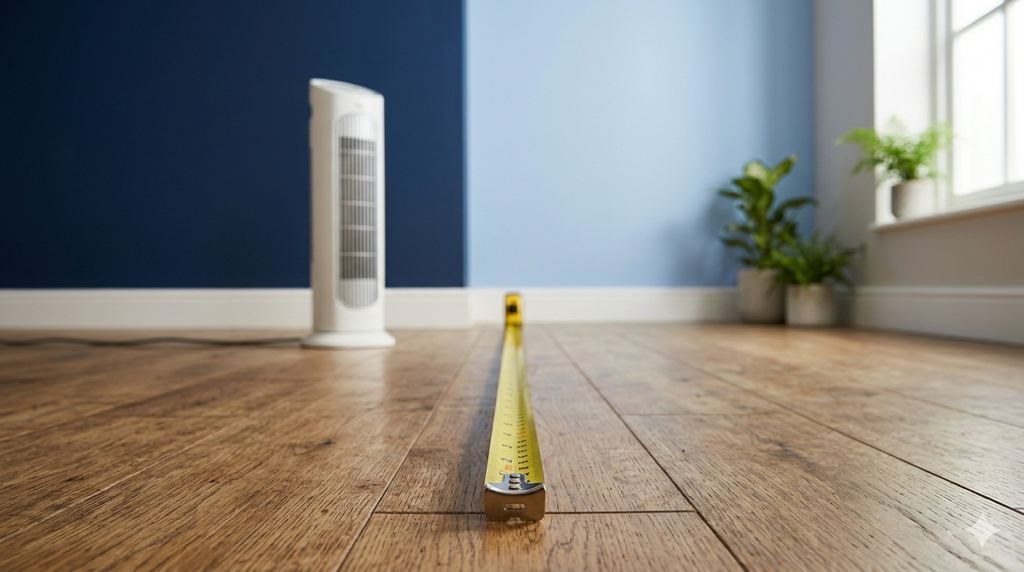
What Size Heater Do I Need? Room Guide for SA Homes
Wondering what size heater do I need to warm your room properly without wasting electricity or buying something that's too small to do the job? Picking the right wattage is the single most important decision when buying a heater — choose too small and you'll be cold; choose too big and you'll burn through electricity for warmth you don't need. The good news: matching heater size to room size is straightforward once you know the simple SA-friendly rule of thumb.
This practical guide walks through how to calculate the right heater wattage for any room in your home, with clear examples for typical South African house sizes. We'll cover bedrooms, lounges, home offices, kitchens, and open-plan spaces, plus the factors (insulation, ceiling height, windows) that change the answer. Find your ideal heater wattage in 5 minutes, then browse the matching options from our heater collection.
⚡ Quick Answer
As a rule of thumb, you need around 100 watts of heating per square metre of room for an average South African home with closed doors and standard insulation. A 12m² bedroom needs roughly 1200W. A 20m² lounge needs around 2000W. Adjust up for high ceilings, large windows, or poorly insulated rooms.
📋 What's in This Guide
- The Simple Heater Sizing Formula
- Heater Size by Room Type
- Factors That Change the Calculation
- Common SA Wattage Options Explained
- Why Buying Too Small (or Too Big) Costs You
- How to Measure Your Room
- Heater Types and Recommended Wattages
- Frequently Asked Questions
1. The Simple Heater Sizing Formula
For most South African homes, you can calculate the right heater size in seconds with one simple formula:
📐 Heater Sizing Formula
Example: A 15m² bedroom needs roughly 1500W of heating power.
This is the rule of thumb used by most heating guides in South Africa. It assumes a standard ceiling height (around 2.4m), reasonably insulated walls, and closed doors and windows during use. If your room ticks all those boxes, the formula is reliable. If your room is unusual — high ceilings, single-pane windows, drafty doors, or no ceiling insulation — you'll need to scale up by 20–50%.
For the more cautious approach, you can use 120W per m² instead of 100W. This gives you a bit of safety margin — better to have slightly more heating power than you need than to be cold all winter because you bought a heater that's underpowered.
2. Heater Size by Room Type
Here's a practical breakdown of typical SA room sizes and the heater wattage you'll need for each. Use these as starting points and adjust based on your specific room conditions.
Small Bedroom
A small fan heater or compact ceramic heater is ideal here. Consider a model with a thermostat to avoid overheating the room.
Standard Bedroom
Most popular size. A 1200W ceramic heater or oil-filled radiator handles this room comfortably without spiking the electricity bill.
Home Office
A small portable heater with a remote or thermostat is perfect — you'll appreciate the ability to control temperature from your desk.
Living Room / Lounge
You'll want an oscillating heater or a tower heater that distributes heat evenly across the room rather than blasting one corner.
Kitchen / Dining
Choose a heater with safety features like overheat and tip-over protection — kitchens have higher fire risk than other rooms.
Open-Plan Living
Single heaters struggle with very large open spaces. Consider two smaller heaters in different positions or a powerful 2200W+ tower heater.
Hallway / Entrance
A small portable fan heater is enough. Don't oversize — these spaces lose heat fast through doors so a smaller targeted heater is more efficient.
Bathroom
Use only IPX4-rated heaters for bathroom safety, or position a regular heater well away from water sources.
3. Factors That Change the Calculation
The 100W per m² rule is a starting point. Several factors can push your actual requirement higher or lower:
Ceiling height
The standard formula assumes ~2.4m ceilings. If your room has 3m+ ceilings (common in older SA homes and double-volume spaces), increase the calculation by 25–40%. Heat rises, and tall ceilings mean more cubic metres of air to warm.
Insulation quality
South African homes vary wildly in insulation quality. A modern home with insulated ceilings, double-glazed windows and weatherproofed doors retains heat well — stick with the basic formula. Older homes with single-pane windows, no ceiling insulation, and drafty doors lose heat fast — increase the calculation by 30–50%.
Number and size of windows
Large windows (especially single-pane glass) are a major source of heat loss. If your room has multiple large windows facing south or south-east (the cold side in SA winters), add 20% to your calculation. Heavy curtains help reduce this loss substantially.
Number of external walls
A room with one external wall (like a typical bedroom in a townhouse) holds heat better than a room with three external walls (like a corner lounge). Each additional external wall increases heat loss — add 10–15% per extra external wall.
Climate region
Highveld winters (Johannesburg, Pretoria, Bloemfontein) get genuinely cold — frost overnight, single-digit daytime highs. Stick to the standard formula or add 10%. Coastal regions (Cape Town, Durban, PE) are milder; you can often get away with 80W per m² instead of 100W.
How long the heater will run
If you're using the heater only for short bursts (e.g. warming the bathroom before a shower), you can size up slightly to heat the room faster. For all-day or all-evening heating in a single room, match the formula closely and choose an oil-filled or ceramic heater for efficiency.
4. Common SA Wattage Options Explained
South African heaters generally come in standard wattage tiers. Here's what each is best for:
| Wattage | Best For Room Size | Typical Use Case |
|---|---|---|
| 500W – 800W | Up to 8m² | Bathrooms, hallways, very small bedrooms, personal heating at desks |
| 1000W | 8–10m² | Small bedrooms, home offices, quick warmth in any small space |
| 1200W | 10–12m² | Most popular SA size — fits most bedrooms and small lounges |
| 1500W | 12–15m² | Larger bedrooms, medium lounges, dining rooms |
| 1800W – 2000W | 15–20m² | Standard SA living rooms, family lounges |
| 2200W – 2400W | 20–25m² | Larger living rooms, open-plan dining-lounge combos |
| 2400W+ | 25m²+ | Open-plan spaces, very poorly insulated rooms (or use 2 heaters) |
💡 Pro Tip: Heaters with multiple wattage settings (e.g. 1000W / 2000W toggle) give you flexibility. Run on the lower setting for everyday use, switch to high for fast warm-up or unusually cold days. This usually saves more electricity than running a single-setting heater at full power continuously.
5. Why Buying Too Small (or Too Big) Costs You
Getting heater size wrong has real consequences in either direction:
If your heater is too small
It will run continuously at full power trying to keep up, and still struggle to warm the room. You'll be cold AND your electricity bill will be high — the worst of both worlds. The heater also wears out faster because it never gets to cycle off.
If your heater is too big
The heater warms the room quickly, the thermostat cuts in, and the heater cycles off. Then the room cools down and the heater cycles back on. This isn't disastrous, but you've usually paid more for a heater than you needed, and the cycling can feel like temperature swings rather than steady warmth.
If your heater is right-sized
The heater warms the room to your desired temperature and then maintains it efficiently with the thermostat doing most of the work. Steady warmth, predictable electricity bills, and a heater that lasts longer.
6. How to Measure Your Room
For an accurate calculation, you need an accurate room size. Here's the simple way:
Step 1. Measure the length of the room in metres (use a tape measure or estimate by pacing — most adults' steps are roughly 1m).
Step 2. Measure the width of the room in metres.
Step 3. Multiply length × width = floor area in m².
Step 4. Multiply the floor area × 100W = base heater wattage requirement.
Step 5. Adjust up if the room has tall ceilings, multiple windows, multiple external walls, or poor insulation.
"Example: A 4m × 3.5m bedroom = 14m². 14 × 100W = 1400W base requirement. With single-pane windows, bump to 1500W — so a standard 1500W ceramic heater is your sweet spot."
7. Heater Types and Recommended Wattages
Different heater types come in different typical wattage ranges. Here's how to match your needs to the right type and wattage:
| Heater Type | Typical Wattage | Best Match For |
|---|---|---|
| Fan heaters | 800W – 2000W | Quick warmth in small/medium rooms (bedrooms, offices) |
| Ceramic heaters | 1000W – 2000W | Energy-efficient steady warmth in small/medium rooms |
| Oil-filled radiators | 1500W – 2500W | All-day heating in medium/large rooms, overnight bedroom use |
| Bar / quartz heaters | 800W – 2000W | Quick spot heating in small areas (radiant warmth) |
| Tower heaters | 1200W – 2400W | Even distribution in medium/large rooms, often oscillating |
| Infrared heaters | 800W – 2000W | Targeted radiant heating, often better in cooler open spaces |
| Paraffin heaters | 1500W – 3000W eq. | Load shedding, no electricity, off-grid use |
For more on specific heater types and their suitability, read our guides on best ceramic heaters in South Africa, best paraffin heaters in South Africa, and our existing comparison of oil heater vs fan heater electricity consumption.
Found your ideal heater wattage? Browse our full range — and pay later with Happy Pay or PayJustNow at checkout.
Shop Heaters at Perfect Dealz