What Weight Dumbbell to Start With South Africa: Your Guide
What Weight Dumbbell Should I Start With? A South African Guide
Knowing what weight dumbbell to start with is one of the most common questions for anyone new to training in South Africa — and getting it right from the start makes a significant difference to your progress, your safety and your motivation. Too light and you won't see results. Too heavy and you risk injury and bad form. This guide gives you a clear, practical answer based on your fitness level, goals and the exercises you plan to do.
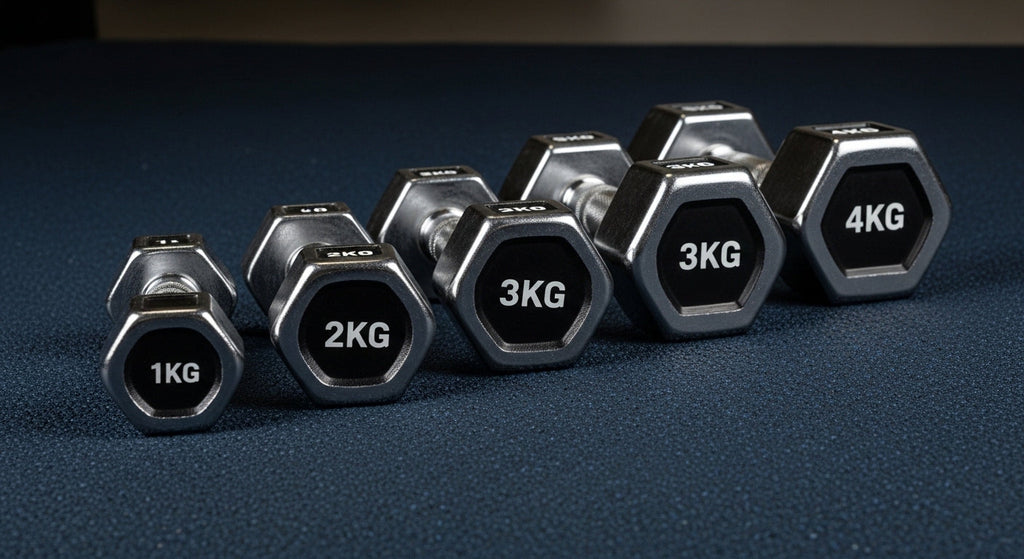
At Perfect Dealz we stock dumbbells from 1kg all the way up to 20kg, plus adjustable sets up to 30kg — covering every level from complete beginner to advanced lifter. Browse our full dumbbells South Africa collection, or read our complete dumbbells buying guide for the full overview.
📋 Table of Contents
1. The Simple Rule for Choosing Your Starting Weight
The most reliable way to choose your starting dumbbell weight is what fitness coaches call the rep test: pick up a weight and perform 12 repetitions of your chosen exercise with good form. If you can't complete 8 reps — the weight is too heavy. If you can easily complete 20 reps — the weight is too light. Your ideal starting weight sits in the range where 12–15 reps feels challenging by the last few repetitions but your form stays controlled throughout.
This simple test works for any exercise and any fitness level. It removes the guesswork and gives you an immediate, honest answer based on your actual strength — not what you think you should be lifting.
"The biggest mistake beginners make is starting too heavy. Good form at a lighter weight will always produce better results — and fewer injuries — than poor form at a heavier weight."
2. Recommended Starting Weights by Training Goal
Your training goal is the single most important factor in determining what weight dumbbell to start with. Different goals require different resistance levels:
| Goal | Women — Start With | Men — Start With | Why |
|---|---|---|---|
| Toning & definition | 1kg – 3kg | 2kg – 4kg | High reps, light weight — burns fat and defines muscle |
| General fitness | 2kg – 4kg | 4kg – 8kg | Moderate weight for full-body circuit training |
| Muscle building | 4kg – 8kg | 8kg – 15kg | Heavier weight for progressive overload and hypertrophy |
| Strength training | 8kg – 15kg | 12kg – 20kg+ | Heavy compound movements for maximum strength gains |
| Rehabilitation | 0.5kg – 2kg | 1kg – 3kg | Very light resistance for injury recovery and mobility |
💡 Important: These are starting weights — not permanent weights. The goal is to progress to heavier dumbbells over time as you get stronger. Start conservatively and increase weight every 2–4 weeks as your strength improves.
3. Starting Weights for Men vs Women
Men and women naturally have different muscle mass distributions — on average, men have approximately 40% more upper body muscle mass than women, which means their starting weights are generally higher. However this varies significantly between individuals, and fitness level matters far more than gender when choosing a starting weight.
For women starting out: A 1kg or 2kg dumbbell is the right entry point for complete beginners focusing on toning, aerobics or rehabilitation. Women who exercise regularly or have some gym experience typically start at 3–4kg for upper body exercises. For lower body exercises like lunges and squats, most women can start heavier — 6–10kg — as the legs are naturally stronger than the arms.
For men starting out: Men with no training background typically start at 4–6kg for upper body exercises like bicep curls and lateral raises. For compound movements like dumbbell rows and chest press, 8–12kg is a reasonable starting point for most untrained men. For leg exercises, starting at 10–15kg is appropriate for most.
4. What Weight for Each Exercise?
Different exercises use different muscle groups — and some muscles are naturally much stronger than others. Here's a practical weight guide by exercise type for South African beginners:
| Exercise | Women — Start | Men — Start | Muscle Group |
|---|---|---|---|
| Bicep curl | 2kg – 4kg | 4kg – 8kg | Biceps |
| Lateral raise | 1kg – 3kg | 3kg – 5kg | Shoulders |
| Chest press | 4kg – 6kg | 8kg – 12kg | Chest |
| Dumbbell row | 4kg – 8kg | 8kg – 15kg | Back |
| Tricep extension | 2kg – 4kg | 4kg – 8kg | Triceps |
| Dumbbell squat | 6kg – 10kg | 10kg – 20kg | Legs & glutes |
| Lunge | 4kg – 8kg | 8kg – 15kg | Legs & glutes |
5. How to Progress — When to Go Heavier
Knowing when to increase your dumbbell weight is just as important as knowing where to start. The principle of progressive overload — gradually increasing the resistance your muscles face over time — is the fundamental mechanism behind all strength and fitness gains.
A simple progression rule to follow: when you can complete 3 sets of 15 repetitions with good form and the last few reps feel easy — it's time to increase the weight. For dip-moulded dumbbells, move up to the next size (e.g. from 2kg to 3kg). For adjustable sets, add the next weight increment. For rubber hex dumbbells, move to the next available weight.
Most beginners can expect to increase their starting weight within 4–6 weeks of consistent training. This is a sign of progress — not a reason to start too heavy. The 20kg Adjustable Barbell & Dumbbell Set and the 30kg Adjustable Barbell & Dumbbell Set are excellent long-term investments because they grow with you — you can increase the weight incrementally as your strength improves rather than buying multiple fixed-weight dumbbells.
6. Best Starter Dumbbells at Perfect Dealz
Based on this guide, here are the best starting dumbbells for South African beginners at Perfect Dealz:
Best for Complete Beginners
1kg Dip-Moulded Dumbbell
2kg Dip-Moulded Dumbbell
3kg Dip-Moulded Dumbbell
4kg Dip-Moulded Dumbbell
Best for Progressive Training
20kg Adjustable Barbell & Dumbbell Set
30kg Adjustable Barbell & Dumbbell Set
Shop dumbbells from R69 at Perfect Dealz — from beginner 1kg sets to professional 25kg adjustable dumbbells. Fast nationwide delivery.
Shop Dumbbells Now